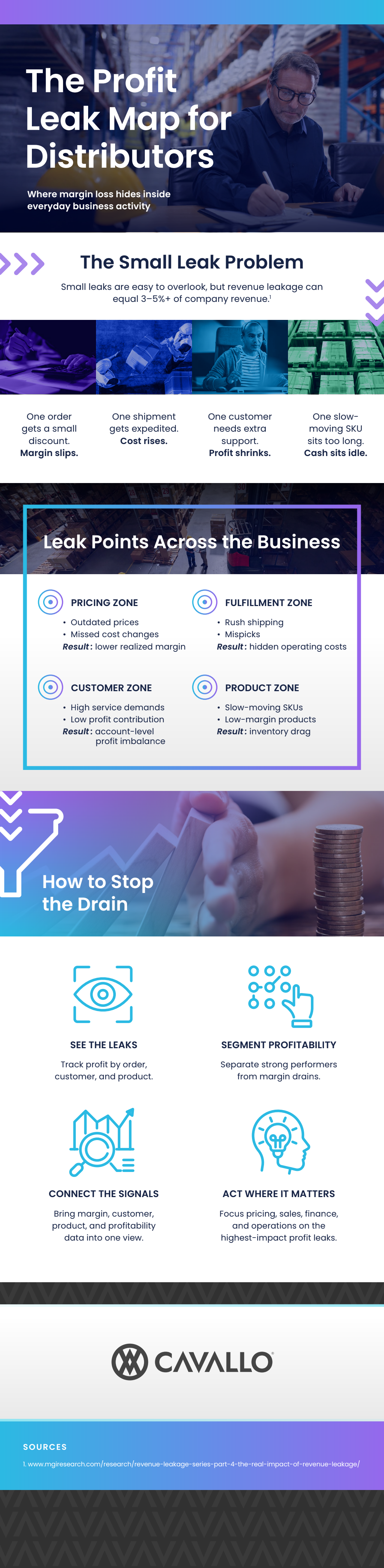



Many of the factors that reduce profitability in distribution businesses are easy to overlook. A discounted order approved without much thought, an expedited shipment that circumvents standard procedures, recurring fulfillment errors, high-maintenance customer accounts, or inventory that moves slower than anticipated can all seem like routine business challenges. Individually, these issues may appear insignificant. Collectively, however, they can have a meaningful impact on margins and often remain hidden until financial results are reviewed after the fact.
The real challenge for distributors is not simply identifying lost profit, but recognizing the warning signs before they become larger problems. Once profitability concerns show up in monthly or quarterly reports, the decisions that contributed to them are often buried within thousands of transactions, inventory records, customer interactions, and operational activities.
Profitability Issues Often Develop in Plain Sight
Most distributors already monitor important metrics such as sales revenue, inventory levels, gross margin, and customer performance. The difficulty is that these metrics are frequently reviewed in isolation.
Sales teams focus on revenue growth and order volume. Operations teams concentrate on fulfillment efficiency and warehouse performance. Finance evaluates profitability trends. Customer service manages exceptions and account issues. While each department has visibility into its own responsibilities, few organizations have a complete picture of how these activities influence profitability across the business.
This disconnect can mask significant opportunities for improvement. A customer generating substantial revenue may require extensive support, frequent order modifications, or special fulfillment processes that reduce overall profitability. Likewise, an inventory item may appear successful because it continues to sell, even though it occupies valuable warehouse space and ties up working capital that could be allocated more effectively elsewhere.
Pricing decisions can create similar challenges. Small concessions made to preserve customer relationships may seem reasonable on an individual basis, but recurring discounts can gradually erode margins without attracting much attention. In many cases, profit leakage occurs not because of a single poor decision, but because teams lack the visibility needed to understand the cumulative effect of everyday actions.
Connecting Data Creates Greater Profit Awareness
Improving profitability does not require adding unnecessary complexity or slowing down business operations. Instead, distributors benefit from greater transparency into the factors that influence margin performance.
A more effective approach is to evaluate profitability at a granular level, including individual customers, products, orders, sales representatives, and market segments. This perspective allows leaders to move beyond broad financial summaries and identify the specific activities that contribute to strong or weak performance.
With that visibility, organizations can begin asking more meaningful questions. Which customers generate healthy margins while requiring minimal operational support? Which accounts may benefit from revised pricing structures, service policies, or order minimums? Which products contribute the most value, and which consume resources without producing sufficient return? Are fulfillment exceptions isolated incidents, or do they reveal recurring process inefficiencies?
Detailed profitability analysis also challenges assumptions that often go unquestioned. High sales volume does not automatically translate into strong profitability. Frequently purchased products may not represent the best use of inventory investment. Long-standing customer relationships may require adjustments to remain financially sustainable.
Turning Visibility Into Action
Profit leaks become manageable once they can be measured and understood. When distributors integrate operational, customer, inventory, and financial data into a unified view using distribution software, profitability becomes something that can be monitored continuously rather than evaluated only after the month has ended.
Organizations that take this approach gain the ability to make more informed decisions, improve operational discipline, and address small issues before they develop into larger margin problems. By treating profitability as part of everyday decision-making, distributors can strengthen performance while creating a more sustainable foundation for long-term growth.